The silent sales killer: How poor availability impacts your sales
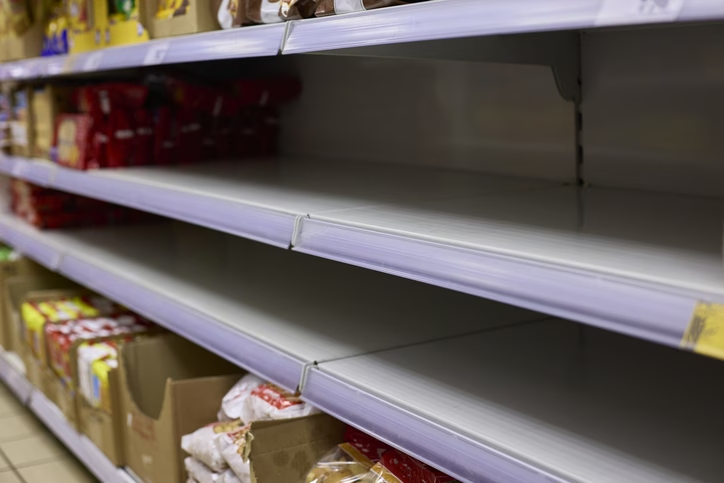
You’ve done everything right—your marketing campaign is firing on all cylinders, your pricing is spot-on, and your product is primed for category domination. But then, the customer reaches for it… and it’s not there.
Poor availability is a sales killer. It’s not just about keeping items in stock; it’s about meeting demand when and where it is needed. Studies show that 30%+ of shoppers switch brands when faced with an out-of-stock, hurting loyalty and future sales. Availability, though often underestimated, drives growth and retention. Without it, strategies fail.
So, what is availability, and why do brands get it wrong?
Availability: A misunderstood metric
Many brands mistakenly think availability just means having products on hand. But metrics can be deceiving. Often, availability is simply a yes-or-no: is there at least one item on the shelf at a specific time each day? A product there at 10 a.m. might be gone by noon, leaving afternoon shoppers disappointed, yet still count as “available.”
The key isn’t just if a product was there, but when and for how long. True availability aligns product presence with shopper demand, minimising lost sales.
Without this understanding, CPGs risk under-realising their performance, leaving potential sales untapped.
The ripple effect of missed demand: How poor availability impacts your bottom line
Poor availability doesn’t just cost you a single sale; it sets off a chain reaction with far-reaching consequences for your CPG brand.
1. Lost sales and the domino effect of customer switching
Poor availability’s most obvious impact is lost sales – if it’s not there, they can’t buy it. This hits CPG companies hard, as stores restock based on sales. If your product is often out-of-stock, it creates a false impression of low demand, leading to reduced future orders and even fewer sales opportunities.
But the damage doesn’t end there. Unavailable products push customers to alternatives, potentially creating lasting loyalty shifts. This not only costs the immediate sale but jeopardises future ones as customers get comfortable with competitor brands.
The staggering cost of lost sales from poor availability
Retailers typically expect suppliers to maintain availability rates close to 98%, yet many settle for 95%. While this 5% shortfall may seem minor, it translates into significant financial losses for both suppliers and retailers, with the industry losing billions of pounds annually. This issue is even more pronounced in certain categories where these losses often go unnoticed. Short-lifecycle products, in particular, often suffer availability rates below 90%, leading to lost opportunities during peak demand periods. For businesses, this is a direct hit to revenue and brand reputation, compounding long-term risks.
2. The high cost of promotional failures
Poor availability during promotions is especially costly. Brands invest heavily in discounts, marketing, and secondary shelf space to drive sales, but out-of-stocks mean a poor return. Success relies on maximising the volume of sales when demand surges. If your product’s unavailable, your investment suffers.
Many promotions are run cyclically, with planning often based on past sales results. Ignoring potential missed sales creates a vicious cycle: under-ordering leads to stockouts, reinforcing the idea that previous figures were the maximum. True sales potential remains untapped, and promotional efforts fall flat.
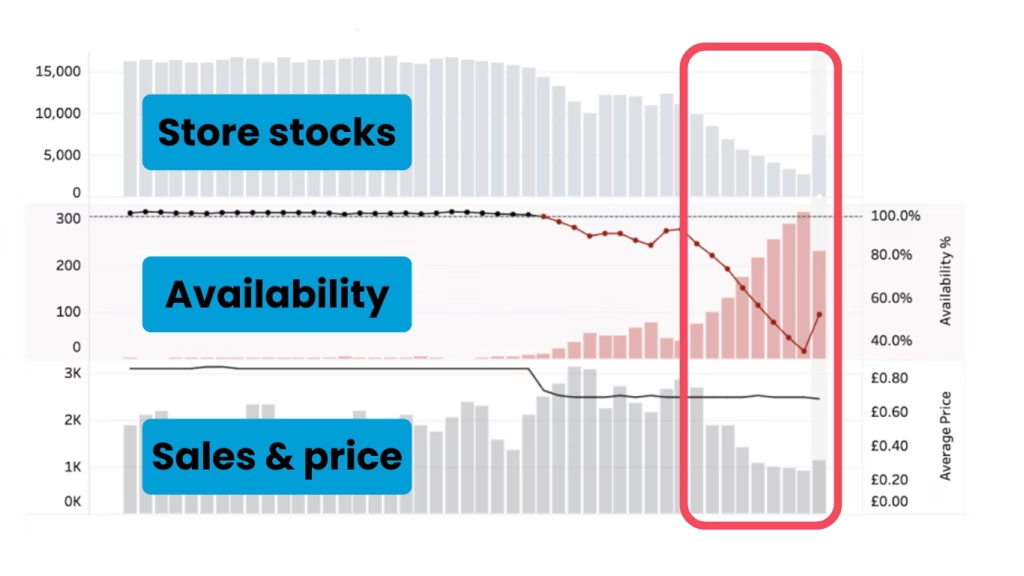
Missed opportunities: The high cost of stockouts during promotions
In this real-world example, a popular product saw its availability plummet to just 34% during a promotion, leaving 315 stores with empty shelves. The price drop clearly resulted in a surge in demand, but limited stock meant a big hike in lost sales. This scenario is all too common, impacting brands of all sizes.
3. Weakened range reviews & financial penalties
Beyond immediate sales, stockouts can harm how retailers perceive your products and even hit your wallet. During range reviews, they focus on a product’s Rate of Sale (RoS), which stockouts can falsely lower. This can lead to reduced shelf space or even delisting. Retailers prioritise fast sellers; if your product appears slow due to stockouts, you risk losing prime spots.
Moreover, repeated stockouts can incur financial penalties. Missing availability targets often results in fines, cutting into your hard-earned profits.
The root of the problem: Why availability falls short
Effectively managing availability is often hindered by a combination of factors. Buyers and planners, constantly pressed for time, struggle to glean insights from dense spreadsheets. This often leads to relying on broad averages, sacrificing crucial local-level insights.
The perils of averaging
Spreadsheets, while valuable tools, can become a bottleneck when it comes to identifying patterns in vast datasets. Analysing data day by day, line by line, can quickly overwhelm even the most seasoned analyst. In the face of this information overload, it’s tempting to average out data – but this can obscure important patterns and trends.
Visualisations, on the other hand, allow us to process multiple metrics and countless data points simultaneously. This holistic view enables you to spot patterns and trends that would remain hidden within a spreadsheet, empowering more informed and proactive decision-making.
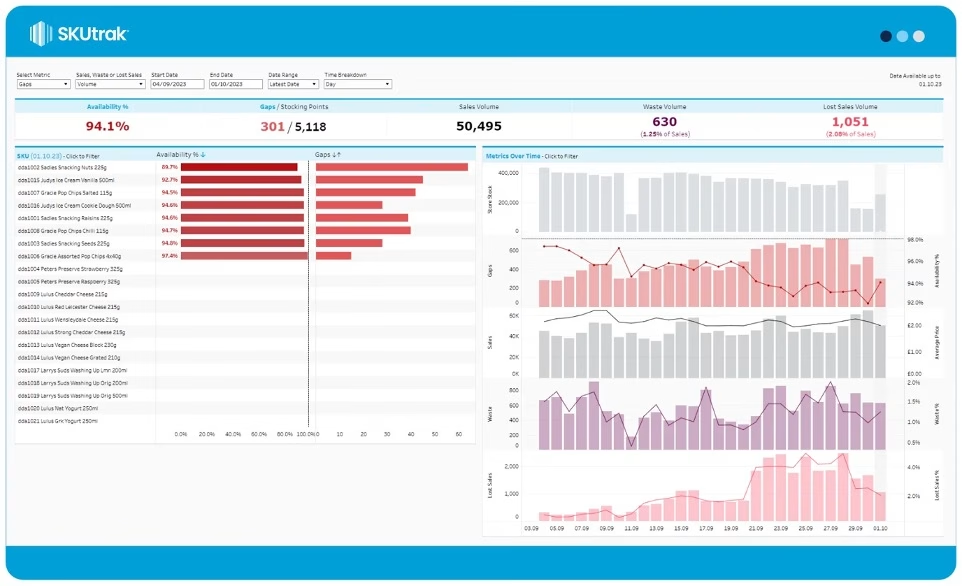
SKUtrak’s Availability dashboard
SKUtrak’s Availability dashboard helps you identify and fix availability issues. Dive deep into your product’s on-shelf availability and related metrics like waste. Quickly see your lowest availability lines, understand the impact on sales, and make targeted interventions. View trends over time to detect recurring patterns and tackle ongoing availability challenges.
Depot and store-level insights are vital
Aggregate data can mask regional variations in stock levels. A product might seem well-stocked nationally, but with most inventory concentrated in one area, other regions face frequent shortages.
Analysing availability at a granular level – by depot or store – is crucial. Effective supply chain decisions happen locally. Whether replenishing a depot or allocating to stores, the data needs to reflect that. Visualisations enabling local-level drill-downs empower brands to pinpoint and resolve availability issues, ensuring products are on shelves when and where customers need them.
Seizing control of availability
The challenges we’ve discussed highlight the significant impact of poor availability. But these issues aren’t inevitable. By shifting from reactive problem-solving to proactive prevention, brands can seize control.
Looking at the flow of goods
The key to preventing availability issues lies not just in analysing sales data but in understanding the entire flow of goods leading up to a stockout. A product disappearing from the shelf isn’t a spontaneous event; it’s the culmination of a chain of events that unfolded earlier in the supply process.
By connecting the dots between production, delivery into depot, shipment into stores, and sales you can identify early warning signs and take corrective action before availability problems occur.
Spotting and prioritising critical availability issues
Managing availability becomes increasingly difficult as the number of products grows. When juggling hundreds of SKUs, identifying and prioritising issues early to meet demand becomes more challenging. Not all SKUs contribute equally to revenue, so deciding which to focus on requires balancing high-value items against those with lower sales but higher demand volatility.
The solution? Focus on the impact of lost sales, not just availability percentages. This means prioritising based on potential revenue loss, rather than how often a product is out of stock.
However, accessing this data can be challenging—retailers often don’t provide it, leaving CPGs unaware of the true cost of stockouts.
SKUtrak solves this by valuing the cost of stockouts, surfacing lost opportunities based on lost revenue, not just availability percentages. This provides:
- A clearer view of missed opportunities.
- Enabling you to rank SKUs by lost sales volume and value.
- Ensuring focus on the most impactful issues.
The complexities of modern supply chains often obscure the root causes of availability issues, leaving brands reacting to stockouts rather than preventing them. SKUtrak empowers you to break this cycle. By visualising the entire flow of goods, from depot to shelf, SKUtrak reveals the hidden patterns and early warning signs that traditional methods miss.
Don’t let poor availability silently erode your sales. See how SKUtrak can transform your availability management and unlock your full revenue potential. Request a demo today and discover the difference proactive prevention can make.

