Stocking up: What’s driving Christmas sales in 2024?

Will Christmas 2024 be a season of cautious spending, overindulgence, or a mix of both?
While festive spending is set to rise this year, the real story lies beneath the headline figures. Inflation, not increased purchasing power, is driving growth, leaving many shoppers balancing value with splurges on luxurious treats. For brands and retailers, this creates both opportunities and challenges: to capture cautious spenders without losing the premium-seeking shopper.
According to AlixPartners’ UK Christmas Grocery Forecast, in-store food sales are expected to grow by 2.5% year-on-year. However, after adjusting for inflation, this translates to a 0.7% decline in real terms (1). Similarly, Kantar reported a 2.3% rise in take-home grocery sales for the four weeks to November 3rd, reaching £11.6bn—the largest monthly sales figure of the year (2).
The figures highlight the need for precision as consumer confidence remains “fragile,” with many shoppers planning to delay purchases until the days running up to Christmas or spreading costs across a longer period.
Consumer spending: A balancing act
This Christmas, shoppers are treading a bit more carefully with their wallets but still making room for festive indulgence.
- Budgeting with care: While 13% of consumers plan to spend more on food, 21% are actively cutting back (1). Even so, premium items are in strong demand as households focus on making key moments memorable.
- Making time to celebrate: With only 21% of shoppers planning to cook Christmas dinner from scratch, demand for pre-prepared meals and time-saving solutions is soaring (3).
- Early birds spreading the cost: Christmas shopping started early this year, with 43% of consumers aiming to finish their purchases before Black Friday (4). Many began as early as September to help manage budgets by spreading costs over several months.
- Buying on deal: Deals continue to be a significant driver of holiday sales, accounting for 29.3% of total purchases over the past 18 months, as consumers seek to counter the effects of rising costs (5).
- Securing festive essentials: Pre-ordering is becoming a holiday staple, with M&S already reporting record demand for their food-to-order ranges. Shoppers are planning ahead to avoid the last-minute rush.
How retailers are competing this Christmas
Despite AlixPartners’ Forecast, retailers remain relatively upbeat. Tesco boss Ken Murphy says the grocery giant is “betting on a good Christmas.” He explains:
“We track customer sentiment every week, and while they’re not doing cartwheels down the aisles, they are in really good shape. You’re seeing a stability in customer sentiment from a grocery point of view, and also a willingness to spend a little bit more to treat themselves.”
While inflation challenges consumer spending power, the battle for festive loyalty is fierce, with retailers finding innovative ways to stand out.
- Premiumisation drives growth: Retailers are doubling down on premium ranges to capture consumers looking to indulge during the festive season. Tesco’s Finest range and Sainsbury’s Taste the Difference have seen significant growth year-on-year (15% and 18% sales increases, respectively) in the run-up. (6,7). Retailers are leaning on premium ranges supported by creative introductions like Lobster Thermidor Crumpets and King Prawns in Duvets to position themselves as destinations for moments of indulgence.
- Innovation meets tradition: Morrisons is combining its traditional Market Street appeal with trend-driven innovations like Passionfruit Martini Panettone and freshly prepared items from in-store butchers and bakers. Meanwhile, Co-op is focusing on smaller gatherings, doubling its premium party food range to include novel offerings like carbonara croquettes and prawn toast tacos. Approaches aimed at blending festive nostalgia with modern twists.
- Convenience from store to door: Online capacity and delivery options remain top priorities for grocers anticipating last-minute demand. Tesco has added 60 extra delivery vans and thousands of new delivery slots to enhance the shopping experience. Asda is preparing for peak demand by increasing staffing hours to ensure its expansive 540-product festive range is well-stocked and readily available.
- Competing on value: Under conditions where cautious spending dominates, discounters like Aldi and Lidl are poised to shine. Their high-quality, lower-cost options—such as Aldi’s Specially Selected range—appeal to shoppers looking to stretch their Christmas budget without sacrificing quality. Expect discounters to solidify their position with further gains in festive market share.
What CPG brands must do now
With December in full swing, flawless execution is paramount. This is the time to put plans into action, ensuring every detail contributes to maximising festive sales:
- Keep shelves stocked: Collaborate with retailers to prevent out-of-stock issues on key items and maintain full shelves, especially during peak trading days.
- Direct products where they’re needed: Monitor depot stock levels and outbound service rates to quickly pinpoint and address distribution gaps, ensuring an even supply across regions while avoiding oversaturation or neglect.
- Eliminate wastage: Prevent overstocking by carefully timing the rundown of seasonal and short-life SKUs, minimising out-of-date or heavily discounted stock.
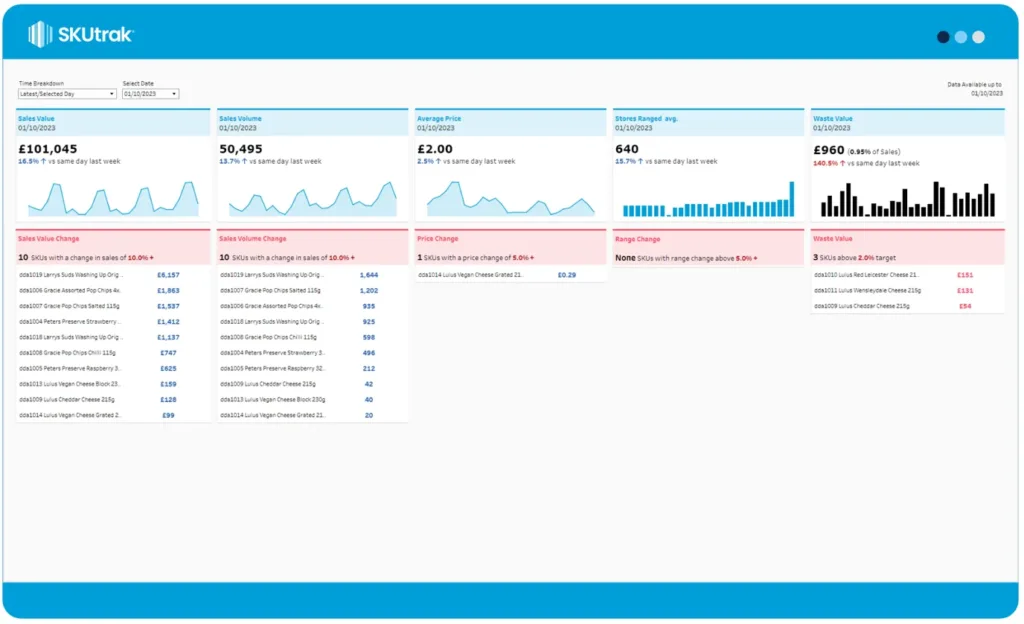
Dashboard alerts to keep Christmas on track
The Commercial Alerts Dashboard helps you track key levers, highlighting SKUs with week-on-week changes in sales, demand, price, distribution, or waste—so you can act quickly.
The Supply Alerts Dashboard focuses on improving availability, showing supply KPIs and alerting you to products with current issues requiring immediate attention.
Conclusion
The brands that succeed during this critical trading period will be those that can adapt quickly to demand shifts and ensure their stock is in the right place at the right time.
A sudden sales surge in mid-December leaves little room for reactive replenishment, with production schedules tight and depots already at capacity. This is where daily sales monitoring and granular stock insights at the depot and store level make all the difference. By anticipating spikes and balancing short-life SKUs carefully, brands can minimise wastage and avoid stockouts, ensuring every opportunity is maximised.
The goal now is to deliver on the promise of the festive season. Whether it’s through maintaining availability, managing rundowns on seasonal products, or keeping shelves stocked until the last mince pie is sold, success lies in execution.
References:
- The Grocer. Grocery sales to be ‘subdued’ this Christmas. November 2024.
- Kantar. Britain’s supermarket sales hit 2024 high as shoppers get ready for Christmas. November 2024.
- Retail Gazette. The Christmas 2024 forecast: Trends from the bosses of Tesco, John Lewis, M&S, and Superdrug. November 2024.
- IPA. The 2024 Christmas Consumer. July 2024.
- Kantar. Households save £1.3 billion on supermarket deals. April 2024.
- Independent. Tesco toasts sales growth as it sees surge in premium shoppers. October 2024.
- The Grocer. City snapshot: Sainsbury’s confident of ‘strong’ Christmas as Taste the Difference lifts sales. November 2024.

