From volatility to resilience — building a data-driven dairy supply chain
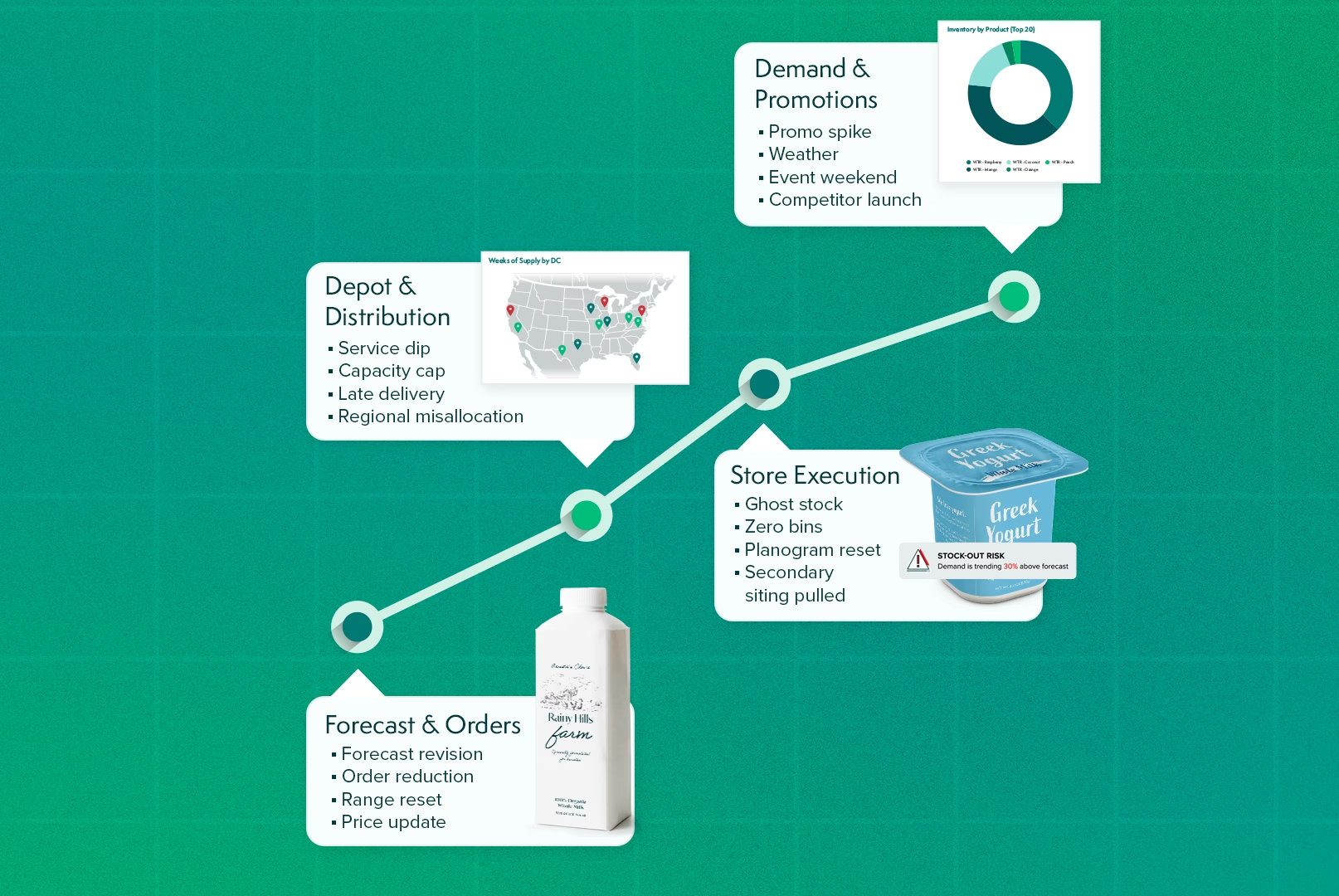
Supply and demand rarely move in sync in dairy. Milk collections rise and fall with weather, feed, and seasonality. Promotions and new product launches pull demand in the opposite direction. One week plants are over-supplied, the next they’re chasing stock. The test for operations leaders isn’t to eliminate volatility, but to build a system that absorbs it — one that can correct before it compounds.
Margins of two or three percent leave no space for error. Each misjudged forecast, delayed allocation, or misplaced pallet carries a real cost. The shift underway across leading dairy operations is from fixed-cycle planning to a more adaptive rhythm — one that reads demand and supply daily and adjusts production, routing, and stock before imbalance becomes loss.
Anticipating milk flow
Supply variation is as old as the industry, but the response is changing. Predictive yield models now give planners clearer sight of what’s coming into the network — factoring in herd health, weather, and feed conditions. Even small gains in forecast precision have measurable impact in a low-margin category: every percentage point of improved accuracy means fewer last-minute haulage changes and less milk diverted to lower-value uses.
Some processors are linking farm and intake data directly into scheduling. What began as environmental monitoring now provides operational foresight — early warnings of regional surpluses or dips that can be balanced before they reach the plant. The result is a steadier flow into factories and fewer emergency processing runs, which cut both cost and waste.

Linking upstream planning and downstream demand
The real opportunity lies in connecting what’s coming in with what’s selling through. Dairy planners are increasingly combining upstream yield forecasts with downstream demand intelligence to create a more responsive supply network. Intake models show the capacity entering the system; daily demand data from retailers reveal where that volume is needed most.
By integrating the two, producers can anticipate imbalance earlier and adjust before surplus or shortfall occurs. This connection links the mechanics of supply with the pulse of the market — giving operations the visibility to fine-tune production and allocation before mismatches turn into waste. It sets the foundation for a faster, more unified operating rhythm.
Turning visibility into action
Progress now depends on more than having data — it’s about using it every day. As reliable daily demand data becomes standard, it’s reshaping how production and distribution are planned. Planners adjust short-term forecasts daily, using current sales figures to tune volumes, packaging formats, and depot allocations in time for that day’s run.
In high-flexibility plants, milk scheduled for one line can be switched to another with stronger pull. Surplus is channelled toward cheese or powder, while capacity shifts back to fresh dairy when demand accelerates. Logistics teams revisit plans midweek to rebalance regional stock — keeping shelves full without excessive buffer inventory.
What once triggered escalation is now routine. Course correction has become part of the operating cycle, driven by consistent daily signals rather than static weekly reports.
Achieving a unified operating rhythm
The next step isn’t just faster reaction — it’s connected action. This alignment depends as much on people as on platforms. When planners, schedulers, and depot leads work from the same view of demand, friction disappears. Decisions happen in hours, not days. That discipline is delivering measurable results. Brands are seeing fewer stockouts, less waste, and tighter alignment between forecast and actual demand.
These are now the true markers of resilience: service levels that hold steady through volatility, forecast variance that narrows week by week, and supply networks that flex to demand. When those measures improve, stability and profit follow.
The new definition of resilience
Volatility isn’t going away. Seasonal flushes, promotions, and new launches will always test supply. The difference between fragile and resilient operations now lies in reaction time.
When intake, production, and distribution respond to the same signals, disruption becomes manageable. Forecasts will still miss, but recovery happens fast enough to prevent loss. The dairies building this reflex — detecting change early and adjusting with discipline — show that resilience isn’t about holding steady, but about staying responsive when everything else moves.

