EPR: Drive sustainable packaging profits with demand intelligence
Extended Producer Responsibility (EPR) regulations present significant financial and operational challenges for consumer packaged goods (CPG) companies.
Under these new rules, the costs for packaging producers are projected to escalate significantly, rising from £200–300 million annually under the current Packaging Recovery Note (PRN) system to nearly £3 billion per year (1). Beyond merely meeting regulatory requirements, EPR necessitates a fundamental shift in packaging management, pushing businesses to rethink how they design, track, and report packaging.
The implications extend far beyond financial costs. EPR affects multiple facets of business operations, including supply chain efficiency, brand reputation, and long-term sustainability objectives. Leading CPG brands are now prioritising packaging designs with end-of-life considerations as a means to innovate, optimise, and minimise waste.
Is your business prepared to adapt, or does it risk falling behind?
The EPR mandate: Implications for your business
With an estimated 12 million tonnes of packaging waste generated annually in the UK (2), EPR regulations aim to address this critical environmental challenge. These regulations transform waste management from a peripheral concern into a core business priority, shifting financial and operational responsibility for packaging waste from local authorities to producers.
EPR compliance affects businesses differently depending on their size:
- Large organisations (£2 million+ turnover and 50 tonnes+ annually): Face significant costs, including EPR fees, waste management charges, and detailed reporting obligations.
- Small organisations (£1 million–£2 million turnover and 25–50 tonnes annually): Have lighter obligations, limited to registration fees and packaging data reporting.
Although EPR fees have been deferred until 2025, producers are still required to report packaging data for 2023 and 2024 to prepare for future fee calculations. The reporting schedule varies by business size. The first fees, based on 2024 packaging data, will follow a staggered payment schedule during the 2025/26 assessment year.
Preparing now allows businesses to mitigate risks, ensure data accuracy, and align packaging strategies with sustainability goals. For further help, visit our resource of essential links: ‘What You Need to Know About Extended Producer Responsibility (EPR)’
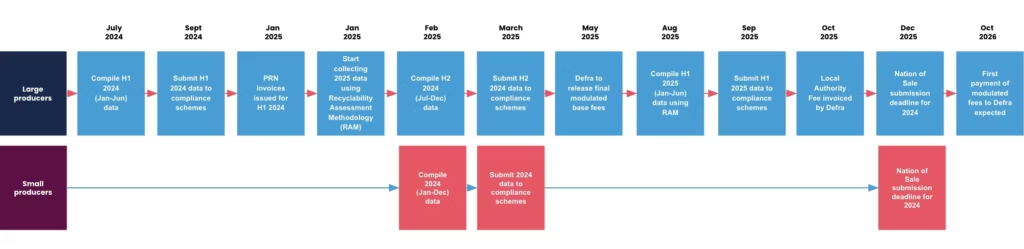
Diagram: Timeline of reporting requirements for producers under EPR
Financial implications
The introduction of EPR regulations has placed packaging costs and compliance under the spotlight. The UK government’s illustrative base fees reveal the financial impact, with costs directly tied to packaging material types and their environmental impact. Sustainable solutions incur lower fees, while less eco-friendly materials are penalised.
For example, FizzCo, a hypothetical beverage company, incurs the following annual costs:
- 5,000 tonnes of PET plastic bottles: £425/tonne = £2,125,000
- 3,000 tonnes of aluminium cans: £405/tonne = £1,215,000
- 2,000 tonnes of glass bottles: £175/tonne = £350,000
This results in a total base fee of £3,690,000. *
These calculations illustrate the need for strategic packaging design and robust reporting to manage costs effectively.
* Calculation uses intermediate rates from the government’s illustrative base fees (considered most likely at this point in time). Click here for more information.
Reporting implications
At the heart of EPR compliance lies data. Businesses are now required to report increasingly granular information biannually, encompassing:
- Packaging activity: Such as brand ownership, packing, or importing.
- Packaging type: Household versus non-household.
- Packaging class: Including primary, secondary, shipment, or tertiary packaging.
- Packaging material and weight: Detailed and precise metrics to ensure compliance.
Errors in classification or reporting can result in overpayments, fines, and reputational harm. Robust data management systems are essential to track and report accurately, reducing risk while supporting broader sustainability goals.
CPG strategies for EPR compliance
The implementation of EPR regulations requires CPG companies to manage new environmental responsibilities while ensuring profitability. Achieving success depends on a balanced approach: fulfilling immediate operational requirements and establishing a strong foundation for long-term sustainability.
In the short term: Managing costs and adapting operations
Many businesses are currently focused on managing costs and adapting their operations. Companies are seeking ways to increase availability and reduce waste to minimise expenses and improve overall efficiency.
At the same time, supply chains are exploring cost-saving measures, such as reducing packaging size and using more efficient materials. However, these efforts are ineffective without accurate data. Reliable tracking and reporting systems are essential to prevent compliance issues, avoid overpayments, and mitigate fines—all while ensuring shelves are efficiently stocked to prevent lost sales.
The DS Smith Material Change Index, which examined 1,500 supermarket products across six European countries, found that 51% of food and drink items in UK stores are packaged in plastic that could be safely substituted with more sustainable alternatives. This translates to a staggering 29.8 billion pieces of avoidable plastic waste annually in the UK alone (3).
Looking ahead: Building sustainability and circularity
Looking further ahead, EPR compliance is driving a bigger shift toward sustainability and circularity. Many brands are rethinking their packaging entirely, embracing recyclable, compostable, or reusable materials to align with both regulations and consumer demand for greener options. Innovations like biodegradable or plant-based materials aren’t just about reducing the environmental impact—they help brands make meaningful strides in reducing their overheads. Long-term partnerships with forward-thinking suppliers are also key to scaling these solutions.
Managing the transition, such as maintaining dual inventories during the rollout of new materials, requires careful planning to minimise waste and disruptions. Finally, the future of packaging is being designed with lifecycle management in mind—ensuring it’s recyclable, reusable, or both. This not only helps brands meet EPR aims but also reinforces their commitment to sustainability, building trust with increasingly eco-conscious consumers.
Five ways demand intelligence drives EPR success
Extended Producer Responsibility (EPR) regulations demand data-driven strategies. Demand intelligence provides the crucial insights to not only meet these requirements but also turn them into a competitive advantage. Here’s how:
- Minimise financial risk: Forecast the impact of packaging changes on sales and profitability. Predict demand shifts from cost price increases to avoid costly miscalculations and optimise pricing strategies.
- Maximise ROI on sustainable packaging: Identify the optimal SKU portfolio based on Rate of Sale (RoS) and its ability to absorb cost increases. Model scenarios to make informed SKU rationalisation decisions that protect margins.
- Streamline packaging transitions: Ensure accurate alignment between product codes across your own internal and retailer systems. This is especially critical when managing dual inventories as old packaging is phased out.
- Optimise inventory and reduce waste: Anticipate demand fluctuations for repackaged products to balance availability with waste reduction, minimising obsolete packaging.
- Adapt to changes effectively: Continuously monitor the build-up and launch of new introductions to ensure successful ranging, distribution, and shelf stocking that maximises sales.
To learn more about how SKUtrak can help you navigate the complexities of EPR and drive sustainable growth, contact us.
References:
- PWC. Update on Extended Producer Responsibility Changes in the UK.
- Business waste.co.uk. Packaging waste facts and statistics
- Sustainability magazine. UK Supermarkets Drowning in Unnecessary Plastic Packaging. Oct 2024

