
Winning at the shelf means more than just securing retail listings—it’s about capturing shopper attention and driving consistent sales. For CPG brands, this ultimate goal requires more than broad averages or estate-level data. The real opportunities lie in understanding what’s happening across regions, formats, and individual stores.
The limitations of estate-level data
Estate-level data provides a helpful overview, but it can be deceptively simplistic. Aggregated metrics like sales, availability, and waste figures often mask crucial variations between individual stores. For example, a product might have an average Rate of Sale (RoS) of 125 tins per week, yet sell 250 tins in some stores and only 30 in others. This lack of granularity can lead to missed opportunities and misguided strategies. Without store-level insights, brands struggle to:
- Identify and replicate successes in top-performing locations.
- Pinpoint and address underperformance in specific stores.
- Refine assortments or promotions to better align with local demand.
Without these insights, brands risk misinterpreting trends, struggling to address underperformance and missing growth opportunities.
Store-level data: A comprehensive view
Store-level data provides an in-depth analysis across key dimensions, supporting both strategic and tactical decision-making:
Regional and format performance
Understanding product performance across different regions and store formats is vital because shopper needs vary significantly. For instance, a brand might thrive in the North but not the South, or in urban transit hubs but not suburban convenience stores. These insights can then inform adjustments to product range or packaging to better cater to specific locations.
Store-specific interventions
Even within high-performing regions, individual stores may underperform. Store-level data helps pinpoint these outliers, enabling targeted interventions. Field teams can focus their efforts where they’re needed most, addressing challenges and unlocking growth while minimising resource expenditure.
Strategic applications: Driving RoS and growth
Store-level data is essential for implementing effective strategies that directly impact sales:
Ranging: Granular insights enable precise optimisation of product assortments tailored to individual store formats and local demand. By prioritising high-performing SKUs and replacing underperforming products with more suitable alternatives, brands can maximise RoS and overall sales.
Distribution: Store-level data uncovers gaps by identifying high-performing regions or store types where a product is unavailable. Expanding into these areas ensures better alignment with local customer needs, increasing product availability and sales.
Waste: Products with short shelf lives, such as fresh or perishable items, require precise supply management. Store-level insights identify locations experiencing high waste due to low demand. Adjusting packaging sizes and SKUs, or even removing products from underperforming stores, can minimise waste without compromising sales potential.

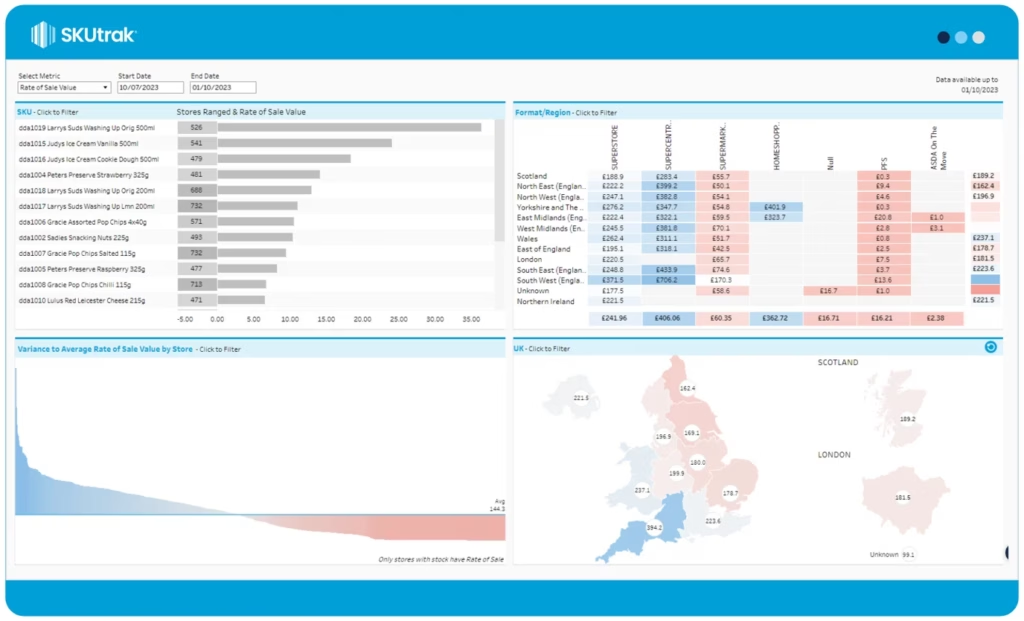
Store rate of sale dashboard
The Store Rate of Sale dashboard offers two years of detailed sales velocity insights by SKU, region, format, and store, helping you identify opportunities for distribution increases and target in-store performance improvements. It is one of many store level dashboards offered by SKUtrak Insights.
Tactical applications: Optimising retail execution
Store-level data is essential for tackling tactical challenges and enhancing retail execution:
Daily availability monitoring: Monitor stock levels in near real-time to prevent stockouts and replenishment issues. Analyse recurring out-of-stock trends to enable proactive interventions, ensuring depot stock is swiftly delivered to the shelves.
Promotional compliance: Ensure that promotions and new product trials are implemented correctly from the outset. Store-level data can identify locations with compliance issues, allowing teams to target interventions effectively.
Inventory accuracy: Detect and address discrepancies between system inventory and actual shelf stock, often referred to as “ghost stock.” Ghost stock occurs when a product is recorded as available in the system but is missing from the shelves, leading to lost sales and frustrated customers. Demand intelligence platforms use algorithms to spot these patterns, providing insights for accurate reordering.
Driving value from field sales interventions
By leveraging store-level insights across stock availability, promotional compliance, and inventory accuracy, brands can unlock significant ROI improvements from field sales efforts. Targeting stores with multiple issues—across various CPG products—enables teams to resolve several challenges in a single visit, maximising efficiency and reducing operational costs while driving better execution at the shelf.
Turning overwhelming data into actionable insights
Store-level analysis may seem complex, but data visualisation tools simplify the process. According to Jo Henderson, Collaboration Manager at Britvic, “Visualisation helps us make faster, better decisions, while store-level data uncovers blind spots, ensuring we take the right actions in the right stores at the right time.”
Dashboards featuring heatmaps and scatter graphs track key metrics, revealing trends and pinpointing SKUs requiring intervention. These tools identify product performance by region and store group, monitor stock levels to prevent availability issues, and highlight service disruptions. Waste patterns also become clear, enabling precise adjustments that reduce losses and improve profitability. Crucially, achieving this doesn’t need to be difficult, time-consuming, or complex.
Strengthening retail partnerships
Store-level insights also enhance collaboration with retail partners. By identifying underperforming stores or SKUs, brands can demonstrate how localised challenges impact overall performance. Tailored interventions—such as targeted promotions or adjusted pack sizes—show a commitment to improving outcomes and fostering trust with retailers.
As Jaime Morris, Commercial Account Manager for Tesco at Vibrant Foods, explains, “Store-level data gives us a powerful edge by revealing underperforming products or distribution gaps. This allows us to defend shelf space, recommend new listings, and drive innovation to meet the evolving needs of shoppers.”
These insights also strengthen weekly collaboration by prioritising specific SKUs with retail supply chain partners. By focusing on the right products and aligning on priorities, brands can ensure strong performance across the store network, fostering mutual trust and continuous improvement.
Conclusion
Estate-level data offers an incomplete perspective on CPG performance. Real growth comes from analysing store-level data. This common sense approach increases sales, reduces waste, and enhances retailer partnerships through actionable, data-driven insights. Importantly, utilising store-level data doesn’t have to be daunting.
To learn more about how SKUtrak can help you leverage store-level data to shape demand, please speak to your dedicated Customer Success Manager, or book a demo.