

A lean supply chain needs comprehensive, accurate information to function properly. An agile supply chain requires accurate and timely information. Today’s grocery supply chains need to be both lean and agile, requiring comprehensive, accurate information available for analysis in a timely manner. Daily data representing the whole supply chain—from production to the till—is critical if retailers and suppliers want to work together to meet shopper demand.

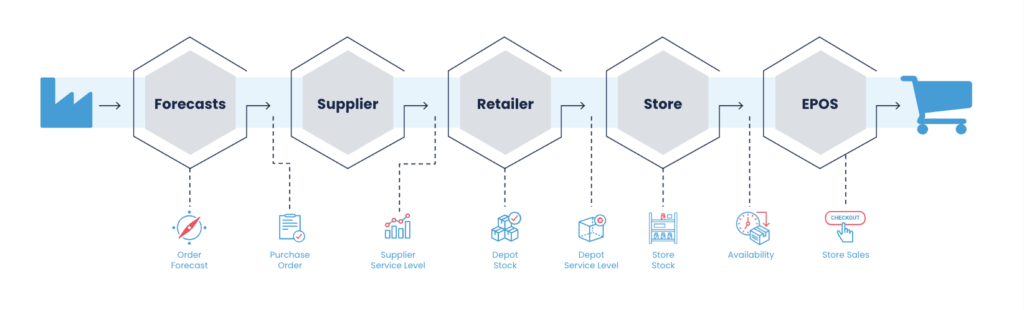
While grocery retailers have access to a wealth of data, the complexity of their data systems can make it challenging to connect different demand signals and their contexts effectively. How many reports do you need to run on your retail customer systems to answer:
- How many days stock cover do we have for product X?
- How does this vary by depot and store?
- Which depots are most at risk of stock outages? And which stores?
- How does short delivery to depot Y impact availability?
- Which promotions suffered reduced sales because of low depot stock?
Optimising the flow of goods with a holistic view of your supply chain
To address these questions and hundreds of others, you need to run multiple reports on retailer systems seven days a week and stitch together their contents to link to sales, waste, availability, distribution, store and depot stock, and movements between you, customer depots, and stores in order to understand how products flow through the supply chain in response to shopper demand.
Without this proactive approach, you are left to react, rather than plan and execute, with predictable results that can be detrimental to your operations:
- Out-of-stocks: When your products aren’t on shelves, you miss sales opportunities. Shoppers choose alternatives, potentially leading to long-term brand loyalty loss. This strains retailer relationships and can even decrease overall demand for your products.
- Overstocks: Excess inventory ties up valuable capital that could be used elsewhere. It leads to increased storage costs, potential product waste, and can damage customer relationships, jeopardising future listings and growth opportunities.
The grocery industry is undergoing a profound transformation, and supply chain visibility is a critical enabler of success in this evolving landscape.
Deloitte’s 2023 Retail Industry Outlook
Embrace Flow-of-Goods thinking for a holistic supply chain strategy
Flow-of-goods thinking removes the silos between account management, supply chain, and revenue management, helping suppliers and retailers better understand their interconnected system. Without this holistic view, you risk:
- Missed sales due to stockouts: When demand spikes, you need to be ready with sufficient inventory.
- Excess stock in the wrong locations: Misallocated stock ties up capital and can lead to waste.
- Delayed response to problems: Stockouts and delivery delays go unnoticed until it’s too late.
- Costly mismatches: Inaccurate retailer forecasts lead to overproduction or underproduction.
Effective supply chain analytics, driven by flow-of-goods thinking, can help you overcome these challenges by providing:
- Integrate and visualise data: Combine data from across your supply chain and model it to reflect real-world conditions. This provides the context needed to understand your information clearly.
- Link key metrics: Connect sales, availability, stock levels, orders, and deliveries. Compare these with forecasts to gain detailed, contextual insights beyond traditional “EPOS analysis.”
- Improve supplier service levels: Discover the real impact of supplier service levels on store availability. Identify depot service issues to help customers better order, ship, and stock your products.
- Optimise distribution: Assess, evidence, and cost distribution changes to advise your customers on effectively and efficiently meeting shopper demand.
- Monitor promotions: Track the preparation, execution, and impact of promotions. Ensure you and your retail customers meet actual shopper demand, not just what is limited by available stock.
Digital supply chains built with visibility, collaboration, and advanced analytics capabilities are better positioned to anticipate, sense, and respond to disruptions.
McKinsey, The Next Normal in Grocery Retail: Winning Strategies for Disrupted Times
Upgrade your mindset with Flow-of-Goods
Upgrade your sales and supply chain mindset to Flow-of-Goods and provide lean, agile, value-added service to your grocery retailers. The SKUtrak Demand Intelligence platform has evolved around the Flow-of-Goods approach to grocery analytics; our customers:
- Maintain lean stockholding: Stay flexible and responsive to changes in customer demand, minimising working capital for suppliers and retailers.
- Understand Stock-in-Trade Positions: Track stock levels across multiple customers to enable priority shipping of limited stock and maintain an optimal presence across regions.
- Monitor Promotional Performance: Tactically manage promotions to ensure appropriate stock builds, deployment in-store, and reordering so both retailer and supplier meet shopper demand.
- Become Trusted Advisors: Work collaboratively with retailer customers to ensure that the right products are in the right place at the right time, enhancing their trust and partnership.
Want to see SKUtrak in action? Contact us today for a demonstration of how SKUtrak can help you better manage your flow of goods.