
Ian Hall, COO
Getting your on-shelf availability right is more important than the range and choice you offer. As customers continue to split their shopping trips across different retailers and channels – buying little and often – grocery retailers and their CPG suppliers need to work harder than ever to make their offer stand out.
Availability plays a pivotal role in shopper choices
UK grocery retailers have been sharing their supply chain data long before GSCOP made it an imperative. It’s designed to drive collaboration, help both sides have a smarter, slicker supply chain, and focus on where improvements can be made (such as improving on-shelf availability). But as a first port of call to drive change, supply chain data hasn’t had the same appeal as the other retail data sources; it tends to be a secondary item on the shared agenda after sales, profit and mix, and its simplicity is often underestimated in favour of more adaptable, and bluntly more interesting, behavioural and research data.
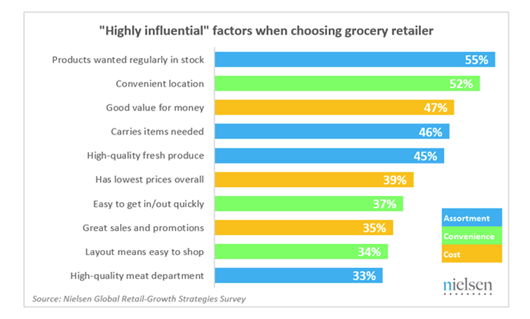
In today’s ‘always on’ world, customers have more control over where they can get the best price, deals, or rewards from the comfort of their homes, and validate their choices when they shop and eventually consume/use the product. As a result, customers aren’t picking price, promotions, or loyalty cards as the main reason they select a retailer to buy from or even the brand or product they wish to buy. The one area a customer cannot control, which is critical in their final purchasing decision, is whether they can buy the product from the shelf (see Fig 1).

The myth of choice
One of the biggest changes in the UK grocery retail industry has been the realisation that the idea of having endless options may not be as appealing to shoppers as previously thought. Tesco, which prided itself on offering the most choices, experienced declining market share and customer spending. While choice was once considered a key factor in attracting shoppers, it quickly became a shrinking line of defence for Tesco as rivals, especially discounters, gained traction by offering more competitive prices.
Shifting towards value, simplicity and better on-shelf availability
In reality, something more important was happening; customers wanted value. As long as the quality was good and the price was better, they were prepared to buy from the discounters and forgo the many brands, flavours, and varieties that their traditional store offered. The breadth of choice wasn’t why they shopped at their chosen retailer; when presented with less choice, as any good category manager could tell you, the customers found it easier to shop, not least because fewer products on the same shelf space meant better on-shelf availability (and a lower cost to serve for the retailer at a time when retail margins were getting tighter and tighter).
Customers still seek excitement, innovation, and choices that align with their reasons for shopping at a particular supermarket. However, they prefer not to face an overwhelming assortment of product variations that complicate their shopping experience, particularly if this abundance hinders their ability to find the products they need. Effective retail strategies balance offering a relevant and appealing selection with ensuring shopping simplicity and convenience.
Meeting demand, protecting loyalty
Availability has become pivotal for retailers and CPGs to optimise; if the product is unavailable, the supply chain has failed the customer. If this happens once, the customer might delay their purchase or substitute for another product, and at worst, the brand will record a lost sale. Yet, if this happens consistently over time and across a store, customers will eventually switch loyalties. The best price, promotion, communication, service or reward strategy becomes inconsequential if the customer cannot buy their preferred product.
The best supply chain data provides an indisputable view of what is missing, where there are gaps in the supply chain, and the impact of not having that brand or product for sale. Unlike research and behavioural data, it is difficult to manipulate this information to suit your business agenda or to validate a speculative hypothesis. The product is either delivered, has sufficient stock to meet demand, and is available for purchase, or it is not.
The UK’s supply chain is globally renowned. Nonetheless, SKUtrak estimates that the UK grocery retail market loses about £9 billion in sales annually due to what we term the ‘Flow-of-Goods’ issue. This problem exists because CPG suppliers struggle to access and utilise the correct insight at crucial moments. While factors like price, service, promotions, and choice vary significantly, the need to buy the desired products remains constant; if customers can’t find what they want, they’ll shop elsewhere.

The solution?
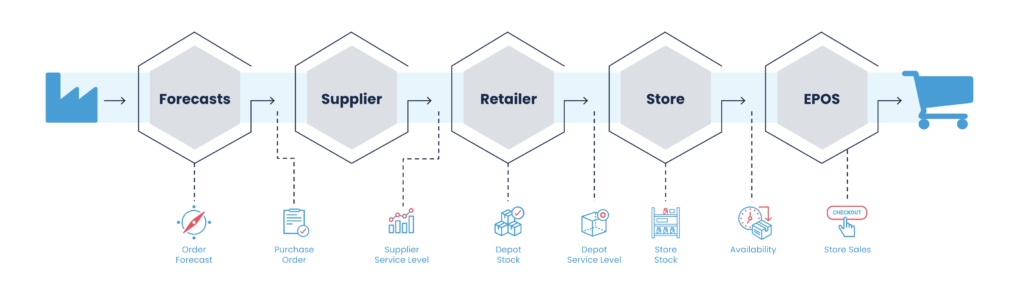
With a complete view of the Flow-of-oods, you can identify how to improve every element of the supply chain. This enables you to adopt proactive measures to protect and increase the availability of critical products by anticipating and addressing low-stock issues in depots and store warehouses before they impact the shelves. Most importantly, you can take action to identify and solve the root causes of stock shortages rather than simply reacting to the symptoms, such as lost sales, reported weeks after the event through category/shopper data.
The questions to ask yourself are:
- Are you only noticing lost sales after they occur, rather than addressing issues proactively?
- Are you struggling to pre-empt problems and inform retailers about potential issues to enhance supply chain efficiency?
- Do you lack the tools to transform retail trading data into timely, actionable reports?
- Do out-of-stock situations frequently prevent your customers from purchasing your products?
If you answer ‘yes’ to any of these, then please take the opportunity to contact us for a demonstration of how SKUtrak can help transform product availability.