
Grocery retail theft is at an all-time high, prompting supermarkets to implement stricter security measures. One of the most significant steps is Morrisons’ new ‘Buzz for Booze’ system, which involves locking spirits and champagne behind glass doors.
The initiative is reportedly being rolled out across 250 stores during October and highlights that minimising shrinkage and safeguarding profits have become top priorities for grocery retailers.
But what does this mean for producers? Spirits and champagne rely heavily on visibility and impulse purchases, yet these changes introduce new barriers between products and customers.
The logic behind locked cabinets
Morrisons’ glass cabinets are more than just a simple lock-and-key solution. Customers press a button resembling a game show buzzer, complete with flashing LED lights, to request assistance. Staff respond via headsets to unlock the cabinets, allowing controlled access to spirits and champagne. This approach reflects a broader trend toward “fortress store” tactics, especially in areas with high theft rates.
With UK retailer losses up 33% since 2018, the scale of the issue has reached a breaking point (1). In 2024, shoplifting incidents in England and Wales hit a 20-year high, with 172,000 in-store crime incidents reported in the first half of the year—a 42% increase since 2022 (2).
“The reality is that every day, four of our colleagues are attacked—an increase of 34% compared to 2022—and alarmingly, a further 115 colleagues will be seriously abused, up 37% from two years ago,” said Matt Hood, Managing Director of Co-op Food, in a recent interview with The Standard, describing the dire situation of staff assaults (3).
For Morrisons, the stakes are significant. Following a £22 million quarterly loss, measures like locked cabinets are deemed essential, despite creating challenges for producers dependent on ease of customer access (4).
The customer trade-off
Glass-door cabinets help reduce theft and protect staff but inevitably detract from the customer experience. Shoppers must request staff assistance, wait, and possibly face delays, particularly during busy periods. This friction risks undermining impulse purchases. Research from Indyme reveals that 63% of customers are dissatisfied with traditional locked cabinets, primarily due to wait times, and 43% avoid using them entirely (5).
In response, Sainsbury’s has taken a different tack, introducing AI-enabled cabinets in some stores earlier this year. These intelligent systems unlock products without staff intervention, maintaining security while minimising barriers to purchase. By preserving the spontaneity of impulse-driven categories like spirits, Sainsbury’s demonstrates how technology has the potential to balance theft prevention with customer satisfaction.
Promotional investments under pressure
The security measures don’t just affect product accessibility—they also diminish the effectiveness of promotional activity. Recipe cards, pairing suggestions, and creative displays lose much of their impact when constrained by glass doors or omitted entirely due to space limitations.
Smaller brands are particularly vulnerable. With shelf space now concentrated on cabinet displays, competition for availability will intensify.
Impact on field sales
The measures could also add new challenges that hinder field sales operations, especially during the upcoming Christmas peak.
Field teams are essential for keeping shelves stocked, maintaining strong facings, and driving impulse purchases through creative promotional displays. Locked glass cabinets will complicate their jobs. Restricted product access and limitations on POS installations could significantly impact the contributions that field teams traditionally make to drive sales performance.

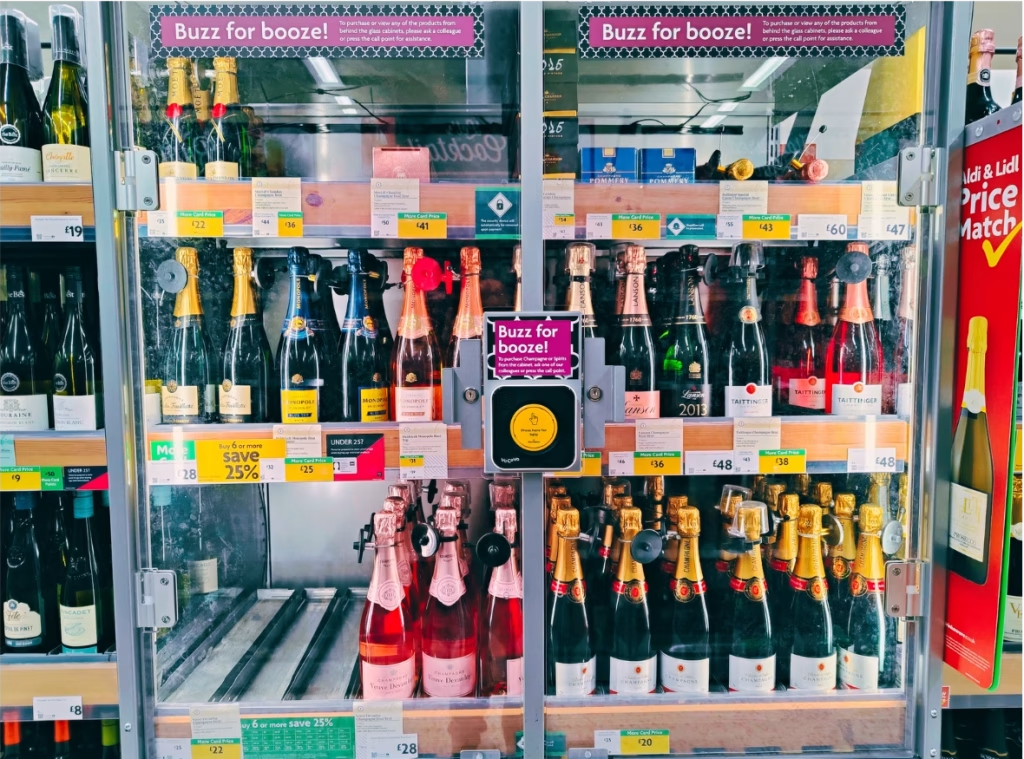
‘Buzz for Booze’ will limit the ability of field sales teams to add more items to shelves, making the job of managing availability even more challenging.
How producers can adapt
Producers can take practical steps to stay ahead:
- Secure visibility: Collaborate with retailers to secure prime placement within cabinets. Advocate for adjustments such as replacing underperforming SKUs and increasing space for high-performing products, supported by data-driven insights. Highlight how these changes can enhance overall category performance, ensuring visibility and driving sales despite restricted setups.
- Rethink promotions: Leverage performance insights to guide trade discussions. Quantify the impact of “Buzz for Booze” on promotional performance and ROI by demonstrating its impact on the volume and *value* of sales. Use this data to strengthen your case for adjusted strategies and secure more in-store support.
- Empower field sales: Provide field teams with near real-time sales data and stock levels to help them identify underperforming stores and focus their efforts where they are most needed.
- Optimise inventory management: Use daily insights to monitor sales trends and refine stock distribution. Address recurring availability issues to align orders and restocks with demand, reducing lost sales opportunities and improving overall efficiency.
By harnessing demand intelligence, producers can:
- Measure sales impact: Compare sales before and after cabinet rollouts to assess the effect on Rate of Sale (ROS).
- Understand promotional effectiveness: Evaluate performance under the new constraints.
- Optimise stock levels: Track supply KPIs, flag critical availability issues and monitor demand trends daily.
Importantly, as the festive season approaches, year-on-year data becomes essential for any producer wanting to distinguish the effects of glass-door cabinets from the impact of the Christmas trading peak.

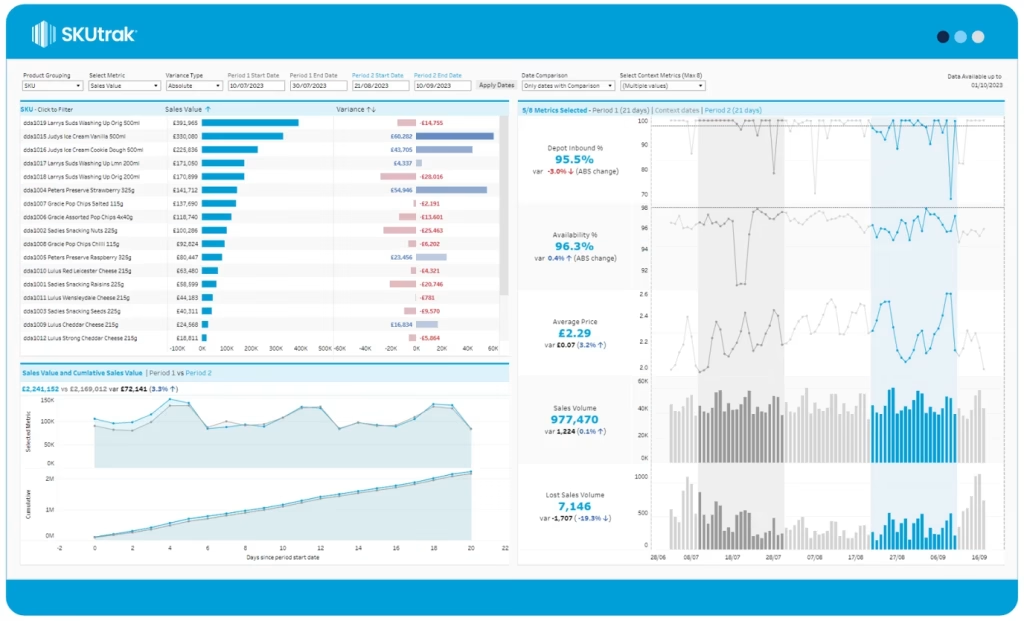
Compare Time Periods Dashboard
Compare performance with precision. The Compare Time Periods dashboard enables brands to analyse up to 8 key metrics across any two time periods—making it possible to assess year-on-year performance.
Conclusion
Morrisons’ ‘Buzz for Booze’ initiative is set to reshape the spirits and champagne categories, presenting both challenges and opportunities for suppliers. The task ahead isn’t just about addressing security or driving sales—it’s about navigating trade-offs and finding a sustainable balance. Whether this widespread approach will extend to other major grocers remains uncertain.
See how SKUtrak helps you measure glass-door impacts, secure better shelf placements and optimise stock levels —book your demo today.
References:
- How can retailers combat unknown shrinkage? The Grocer. September 2023
- King’s Speech: Co-op and Tesco applaud new bill to crackdown on retail crime. Grocery Gazette. July 2024
- Co-op sees cost of shoplifting surge by nearly a fifth. The Standard. September 2024
- Morrisons suffers £22m loss amid debt pressures and sluggish sales growth. The Telegraph. September 2024
- Sainsbury’s locks up booze in AI-enabled cabinets. The drinks business. February 2024